
We Aren’t Broken
How Mindfulness Can Support Trauma
At Peace in Schools, our trauma-informed approach to mindfulness begins with a core, research-backed concept: inherent wholeness.
So often when we experience deep trauma, we can feel as though we are broken, as if something is wrong with us or needs to be fixed. Our facilitators bring decades of experience in mindfulness and trauma-informed practices, and they are trained to meet students and see them as inherently whole from the start. What if we knew that nothing needs to be repaired, and that you’ve been whole this entire time?
When we start from the belief that every person in the room is inherently whole, no matter their past, present, or future, it transforms how we all show up.
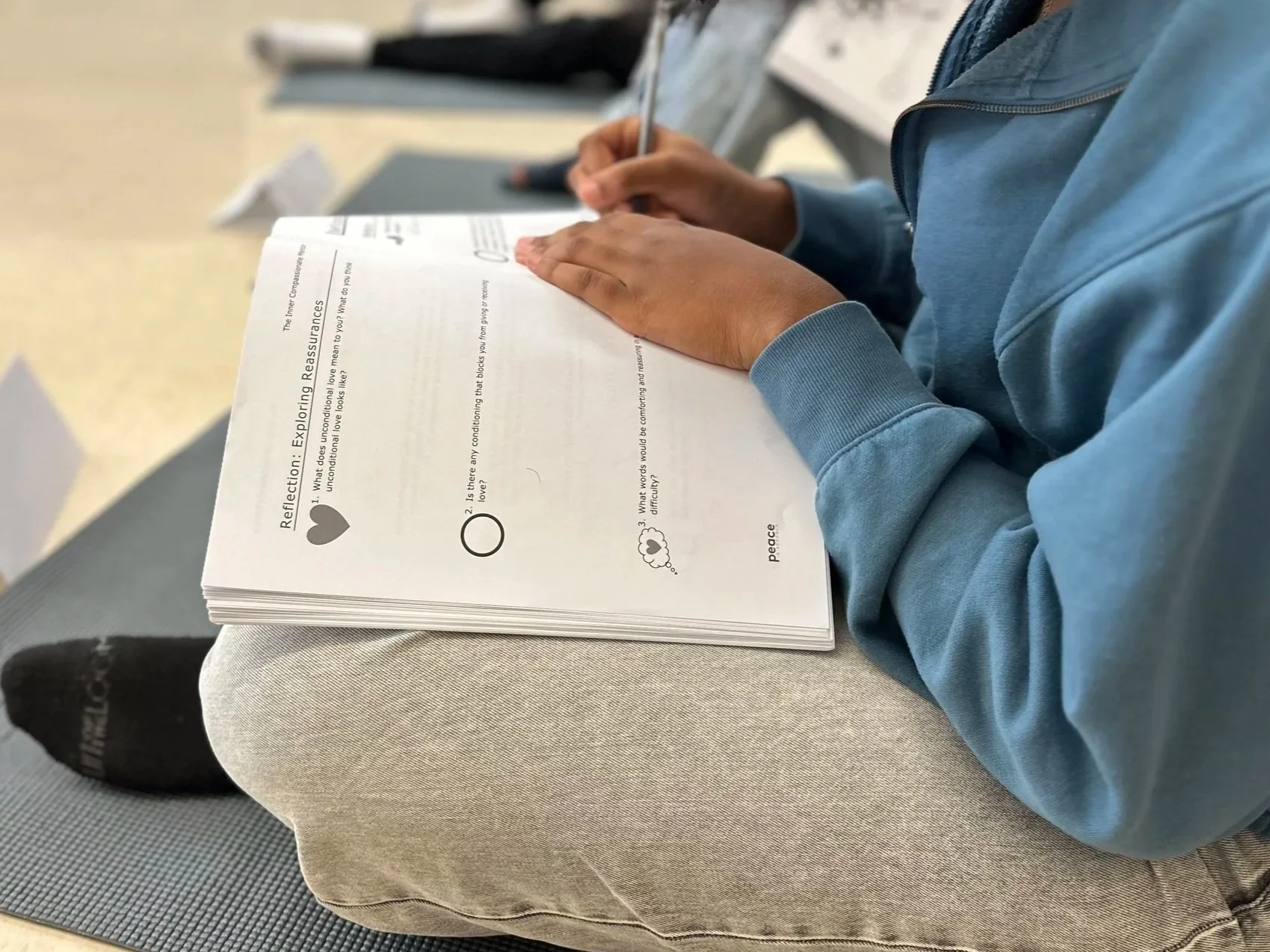
“I have noticed that I have accepted myself a lot more and given myself more compassion and grace.” — Mindful Studies Student, West Linn High School
Our Approach
Our Johns Hopkins research finds Mindful Studies to be a critical resource for teens, with particular benefits for marginalized youth and youth with high trauma. Here are three key ways we bring a trauma-informed approach into our youth curriculum and our trainings for educators and mental health professionals.
Choice and Autonomy
Because many survivors of trauma were not afforded a choice, a lack of choice in a learning environment can feel oppressive or re-traumatizing. We give students the opportunity to respond to their own needs and choose whatever practice feels most supportive in the moment, inviting them to tune into their direct experience.
In both our teen classrooms and adult trainings, we support autonomy by offering options and by allowing students to pass on an activity without needing to explain why.
Co-Creating Safer and Brave Spacest

We aim to co-create an environment that is safer than the spaces students typically frequent, while recognizing that it is not possible to ensure everyone will experience our classroom as a safe space. We also share how the environment can be considered a brave space, a place where we can welcome all parts of ourselves without judgment.
“This class is calming and stabilizing in the sea of noise that is high school education. Students are often not afforded the chance to reflect in a safe environment. This class provides an opportunity to be at peace with your fellow students and learn how to bring that peace with you into your daily life.”
— 12th Grade Mindful Studies Student,
McDaniel High School
Contextualizing Beliefs Within Social Systems
Our beliefs and ways of coping are shaped not only by personal experiences but also by societal forces such as patriarchy, racism, and economic inequality. Recognizing this helps survivors shift away from self-blame. Contextualizing our responses within these larger systems normalizes our reactions, cultivates self-compassion, and reduces feelings of isolation.
This perspective shifts the internal narrative from “What’s wrong with me?” to “What happened to me, and how do the systems around me shape my experience?” Ultimately, it fosters agency and resilience.

“I was having a hard time connecting with myself and others, and I was just doing my best to keep living through it. And then you taught me how to be with myself again and experiencing the shed of trauma and the beliefs that came out of that has helped me start to actually live again.”
— Mindful Studies Educator
How to Train with Peace in Schools
Whether you’re an educator, mental health professional, nonprofit leader, or part of a youth-serving organization, we offer multiple pathways to learn our pedagogical approach to mindfulness. We provide professional development for schools and organizations, self-paced online courses, and offerings for the general public. We also certify youth-serving professionals, nationally and internationally, to bring our mindfulness curricula back to the young people they serve.
And if you’re a parent, a longtime practitioner, or just beginning to explore, you’re invited to join our weekly online community practice, led by our incredible staff.
Learn more about our offerings on our Training Institute and Events pages!